The expertise behind Lumel today comes from over a decade of experience at Visual BI Solutions, building analytics and performance management products while running engagements alongside CXOs, finance leaders, and operational managers. Most of those engagements served executives and decision-makers directly. The team was in the room, observing how people actually consumed data, where insights got stuck, and where planning and reporting tools fell short in ways even the customers themselves hadn't articulated. Then they acted on what they saw.
Each product Lumel built encoded a layer of that learning. The VBX Suite addressed visualization and BI experience gaps. ValQ tackled scenario planning and simulation. BI Hub solved the problem of governing BI assets across the enterprise. xViz pushed the boundaries of data visualization. Inforiver brought enterprise-grade planning and performance management with writeback into Power BI. Each one sharpened the team's understanding of what enterprises actually needed, and each one revealed the next problem to solve.
By the time cloud data platforms started reshaping enterprise infrastructure, the team had a decade of pattern recognition to draw on. They weren't guessing about where the market was headed. They had been watching it from the inside.
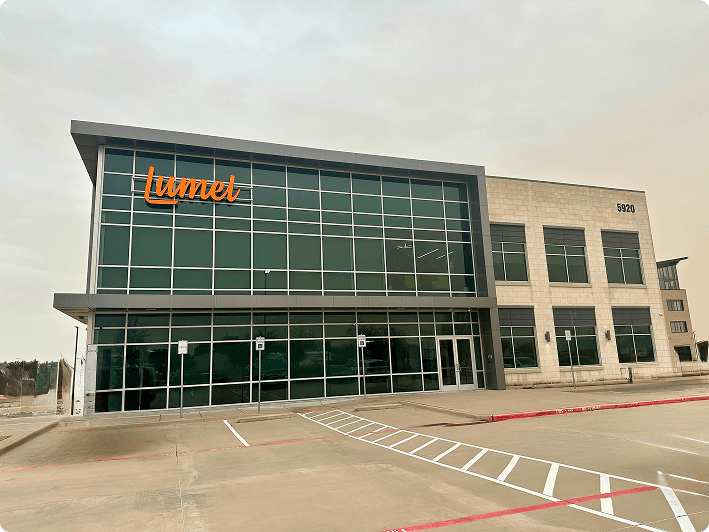
Our office at Plano, Texas
01
Cloud data platforms will win
When Databricks and Snowflake arrived, the signal was clear: enterprise data was moving to unified cloud platforms. Most planning vendors doubled down on proprietary data stores. Lumel went the other way, keeping the codebase in open architecture so it could port to a platform when the right one emerged. Microsoft Fabric was that platform.
02
The market will consolidate on semantic models
From the Visual BI days, the team watched Power BI grow from a departmental tool to the enterprise standard. More telling was how organizations consolidated on Power BI semantic models as their canonical business logic: dimensions, measures, hierarchies, security rules. Then came the Office 365 E5 bundling with Teams post-COVID, putting Power BI in front of every knowledge worker. The conclusion was straightforward: these semantic models would become the foundation for everything, planning included.
03
Application silos cause data silos
The conventional wisdom said data silos were a data problem. Lumel saw it differently. Data silos are a symptom. Application silos are the cause. When your planning and BI tool are separate products from different vendors, your data ends up in separate places. Fixing the data problem meant fixing the application problem first, and that insight laid the groundwork for AI readiness: when plans and actuals coexist in the same environment, you have the data foundation AI needs to work with.
04
One unified stack, built on one data platform
This was the logical conclusion of the first three. If cloud platforms win, if semantic models are the standard, and if application silos cause data silos, then the answer is a single application stack that does planning, intelligence, and data management on one platform. Reading from and writing back to the same data layer. No ETL. No reconciliation. No rebuilding what your organization has already built.
Fabric Planning: the product of everything that came before
Fabric Planning is not a v1 product. It is the culmination of VBX Suite, ValQ, BI Hub, xViz, Inforiver, and over a decade of enterprise engagements. Planning, intelligence, and data management unified natively in Microsoft Fabric. Using the semantic models your teams already built. On the data platform your organization is already investing in. The rise of AI has only validated our conviction that the future of planning belongs to those built natively on semantic models, ontologies, and data platforms.