What is IBCS certification, and why does it matter?
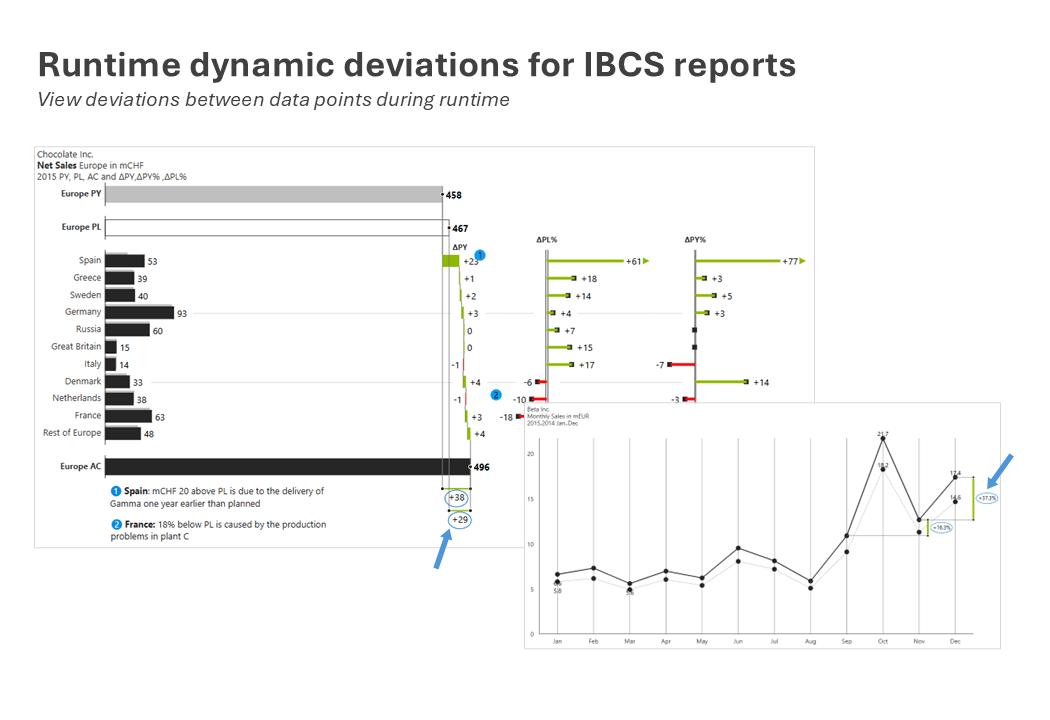
IBCS (International Business Communication Standards) is a set of internationally recognized rules for the visual design of business charts and tables. Certification is granted by the IBCS Association after a rigorous evaluation confirming that a software product fully implements these standards across all applicable chart and table templates. For organizations, this matters because IBCS-certified software produces management reports that are immediately readable by any stakeholder familiar with the standard - reducing interpretation overhead and improving decision quality.
What does the certification for Microsoft Fabric Planning specifically cover?
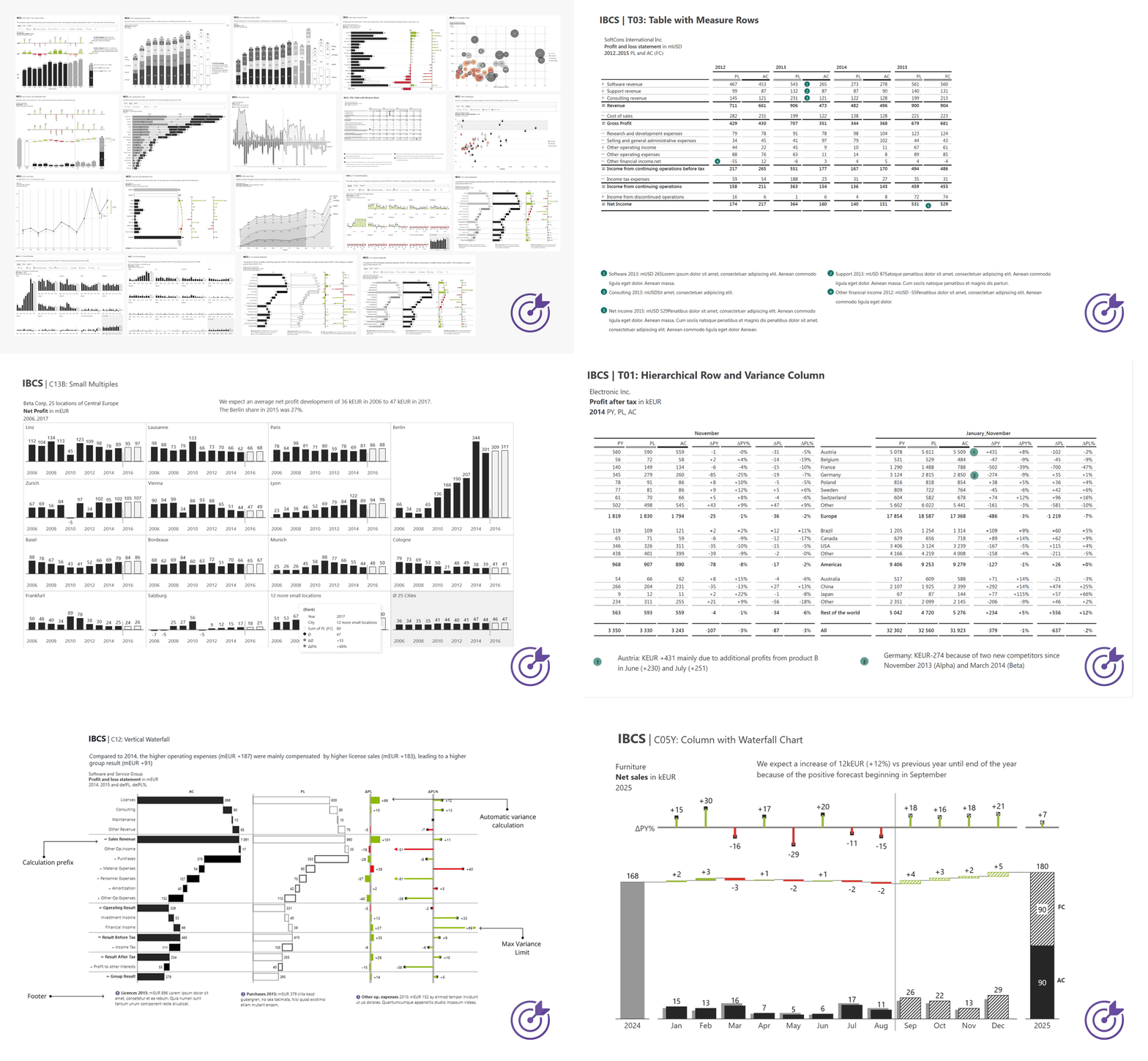
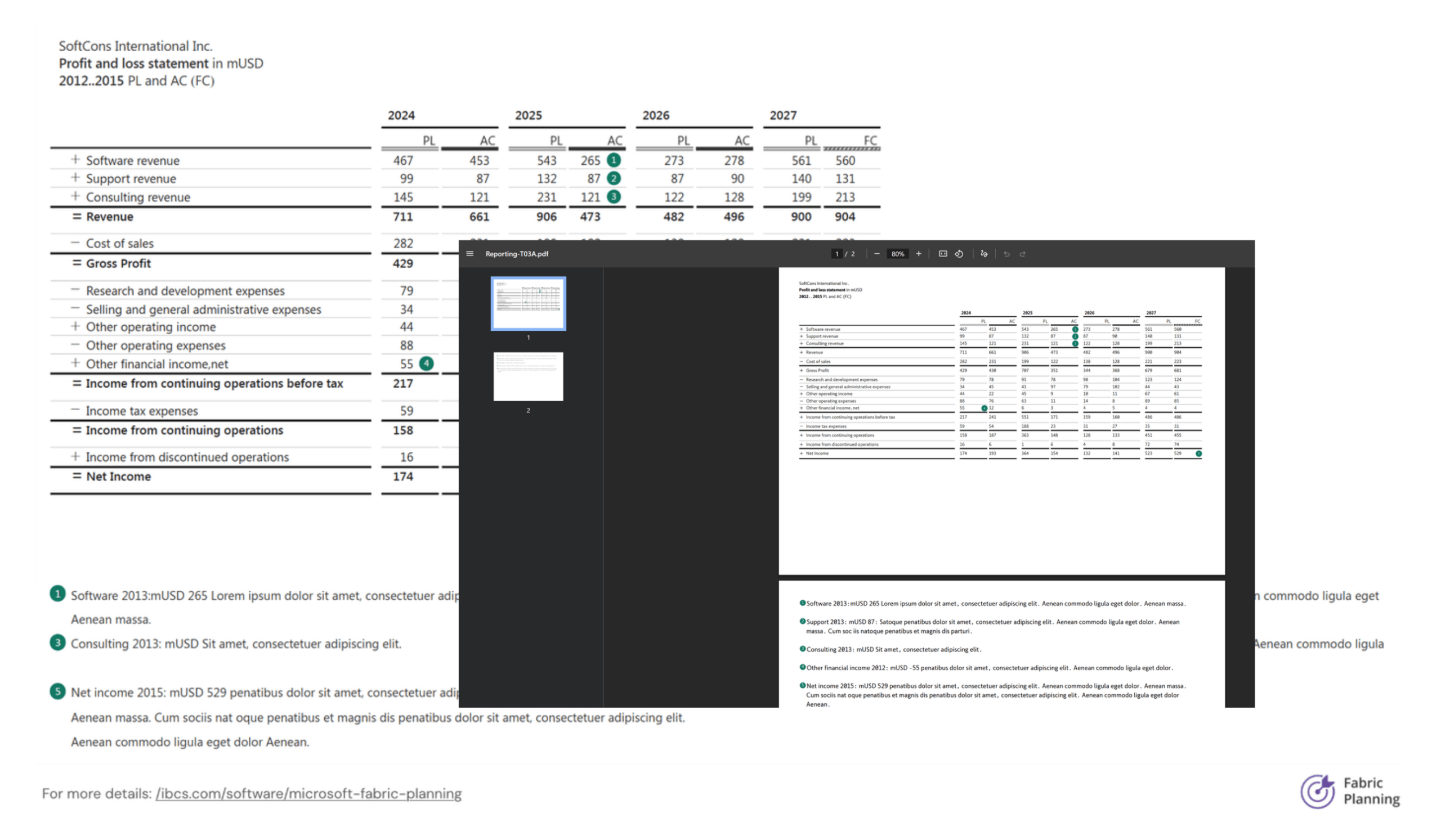
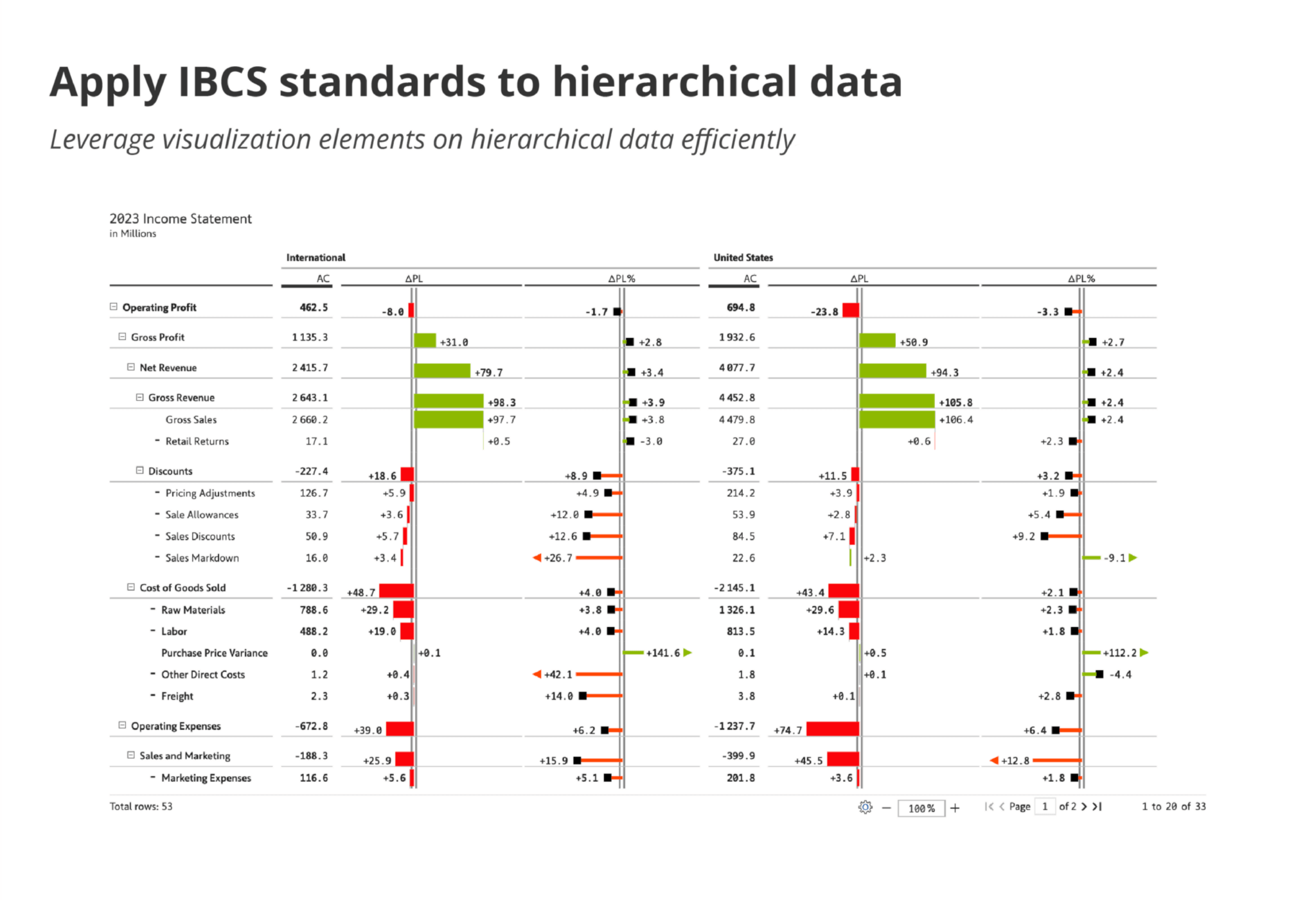
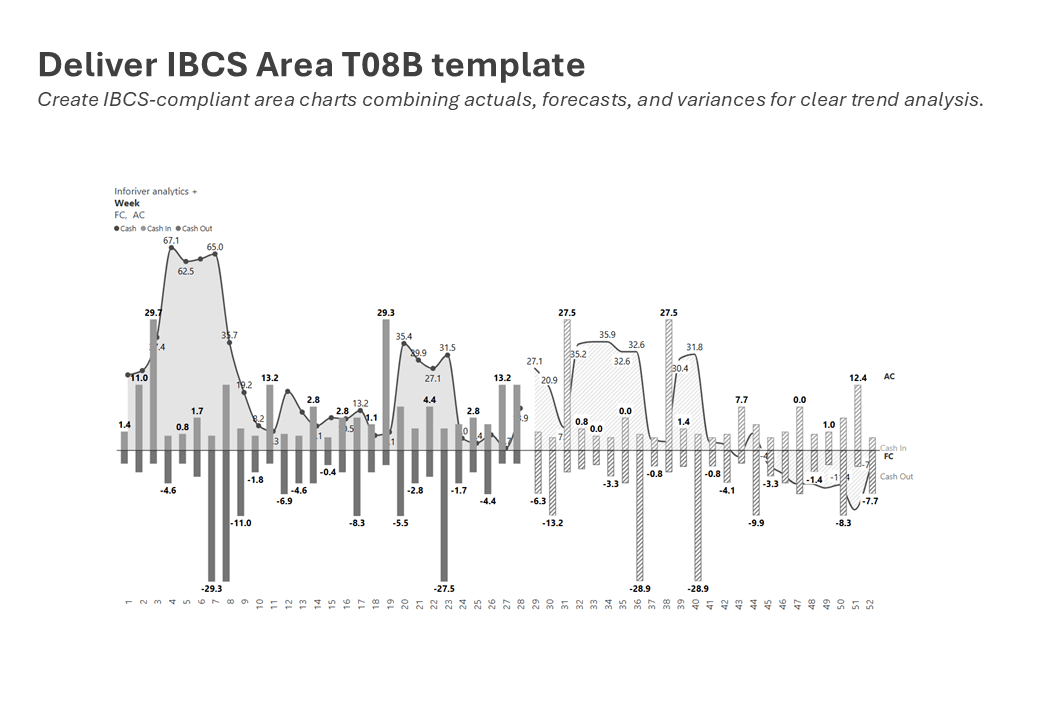
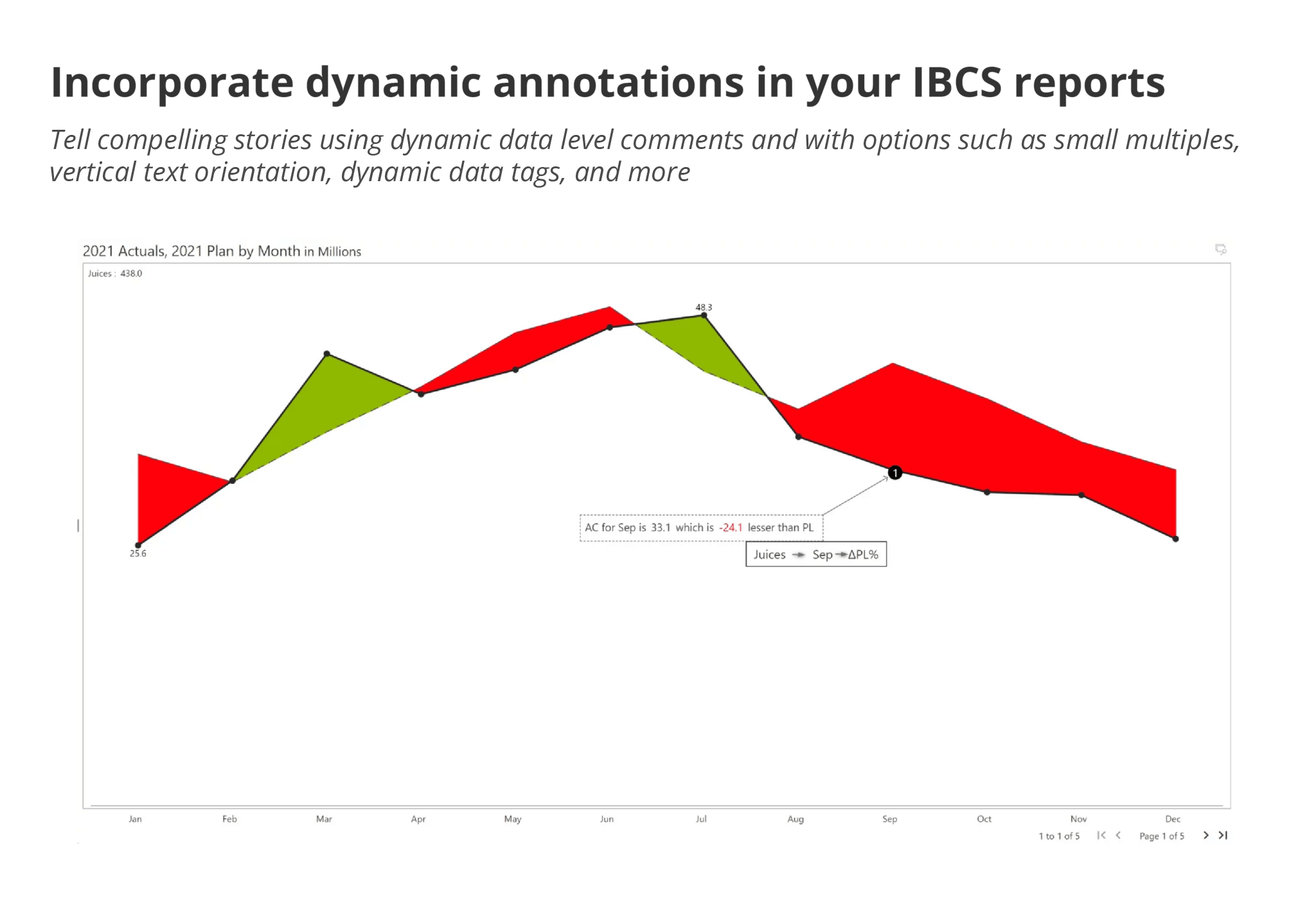
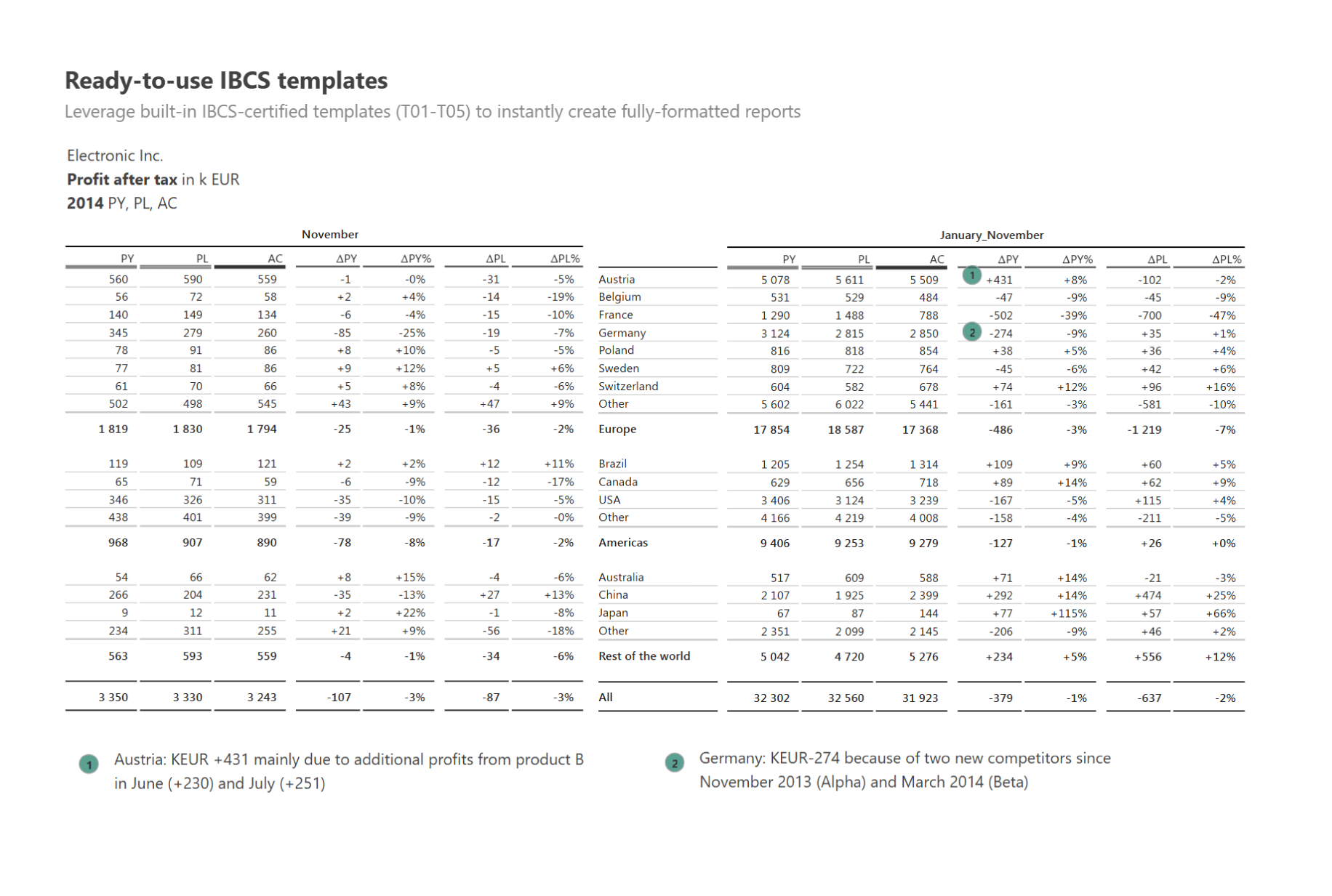
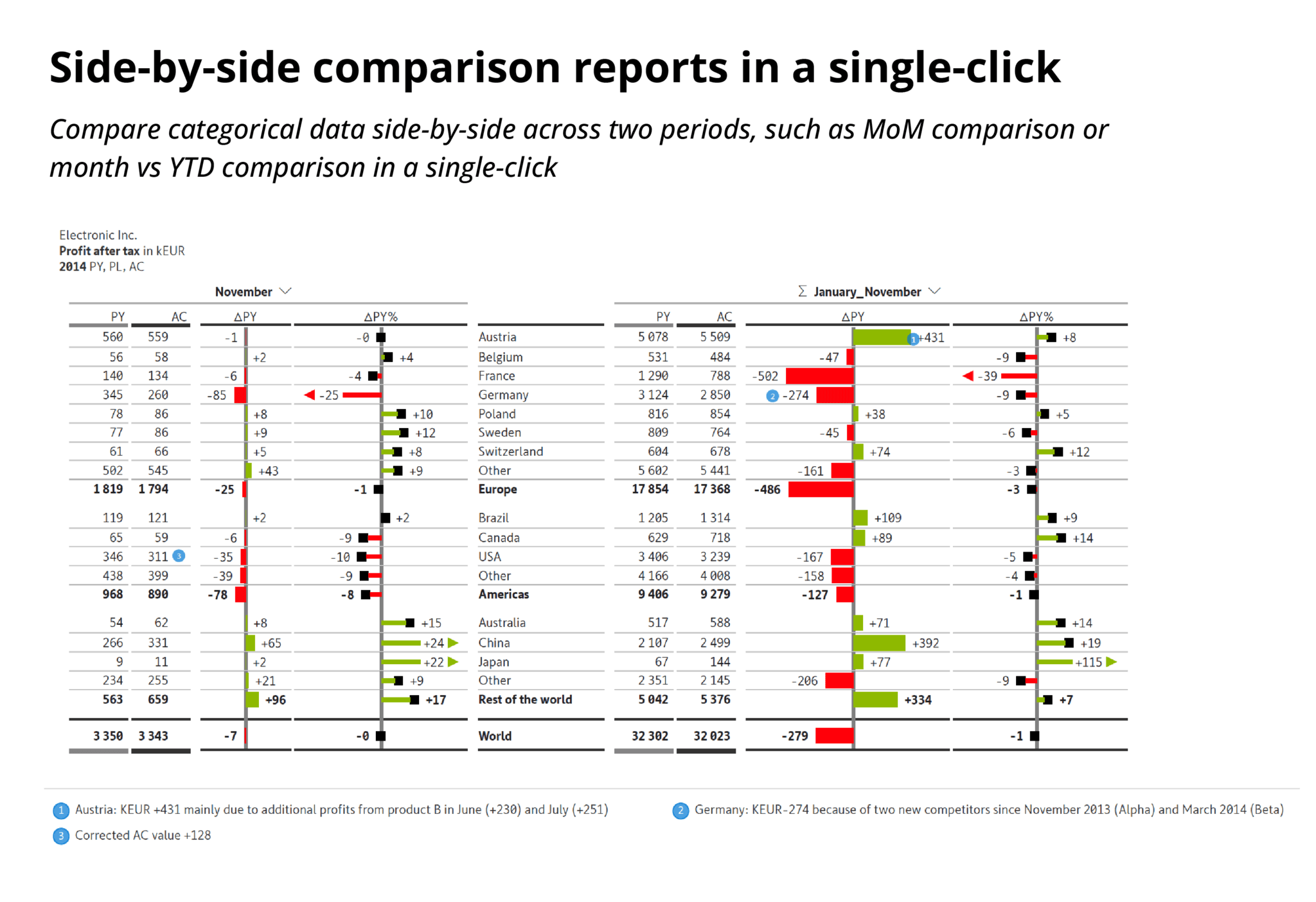
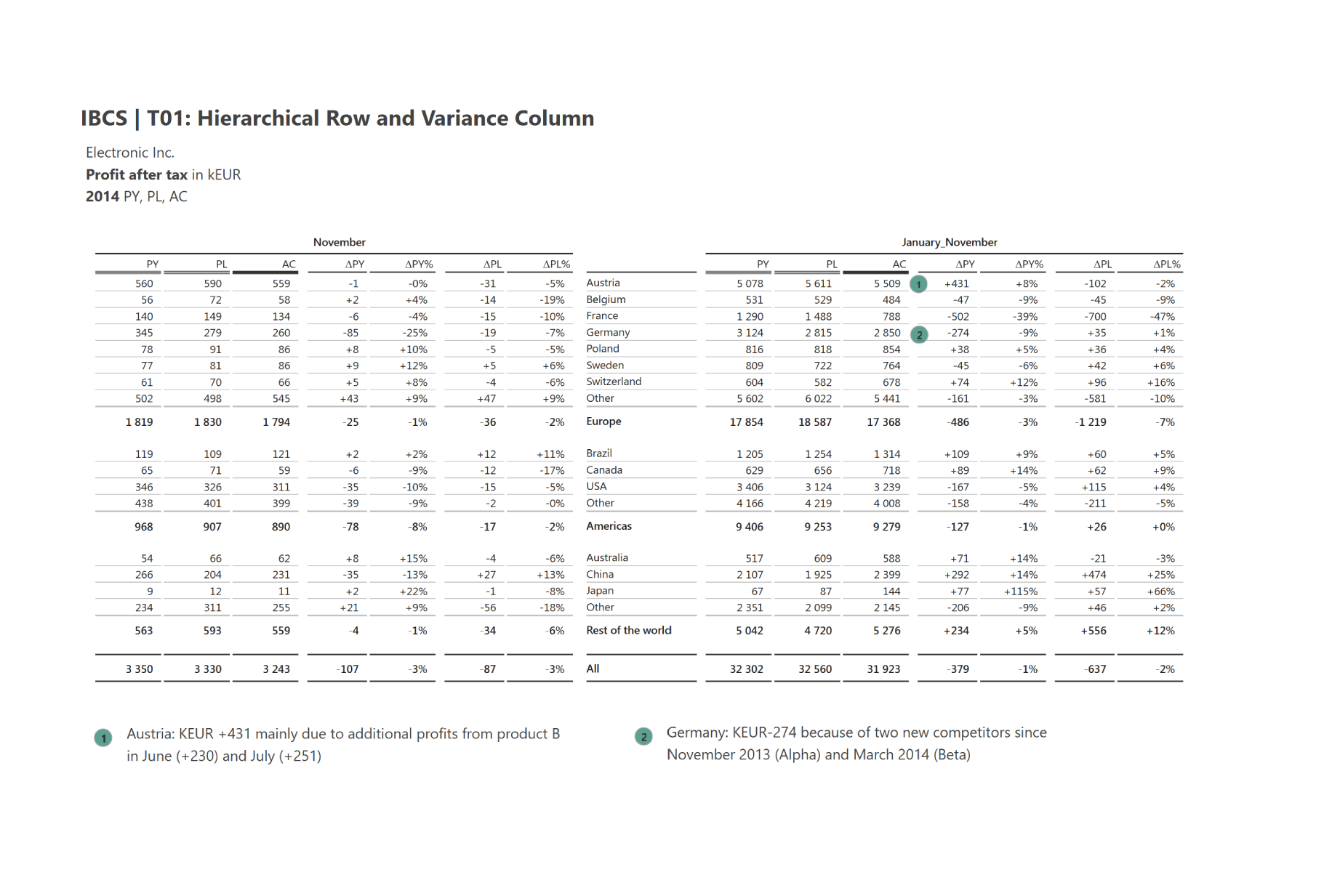
The certification covers the complete IBCS chart template library (C01 through C13) and table templates T01 through T04, plus the bonus T05 template developed by Lumel. It confirms 100% semantic notation coverage - including terms, measures, time-series representation, variance analysis, and overall report structure - as well as visual design elements such as page layout, axes, scaling, legends, labels, and chart types. Both strict and flexible IBCS themes are included in scope.
How does IBCS certification benefit our teams in practice?
Practically, IBCS certification means your finance and FP&A teams can apply a single, globally recognized reporting standard without building templates from scratch. One-click IBCS templates apply scenario notation (AC/PL/PY/FC), automatic variance calculations, and consistent chart layouts instantly. This reduces report-formatting time significantly, allows management packs to be reviewed without explanatory slides, and ensures every report communicates in the same visual language - regardless of who creates it or which business unit it covers.
Is Microsoft Fabric Planning fully IBCS compliant, or only partially?
Microsoft Fabric Planning has achieved full IBCS certification across all applicable templates - C01 to C13 and T01 to T05. The certification was issued by the IBCS Association in May 2026 following a comprehensive evaluation. The product achieves 100% semantic notation coverage, meaning every element of IBCS notation - from scenario representation to variance visualization to general report layout - is implemented correctly. A flexible IBCS theme is also available for organizations adopting IBCS progressively.
What is the difference between the Strict and Flexible IBCS themes?
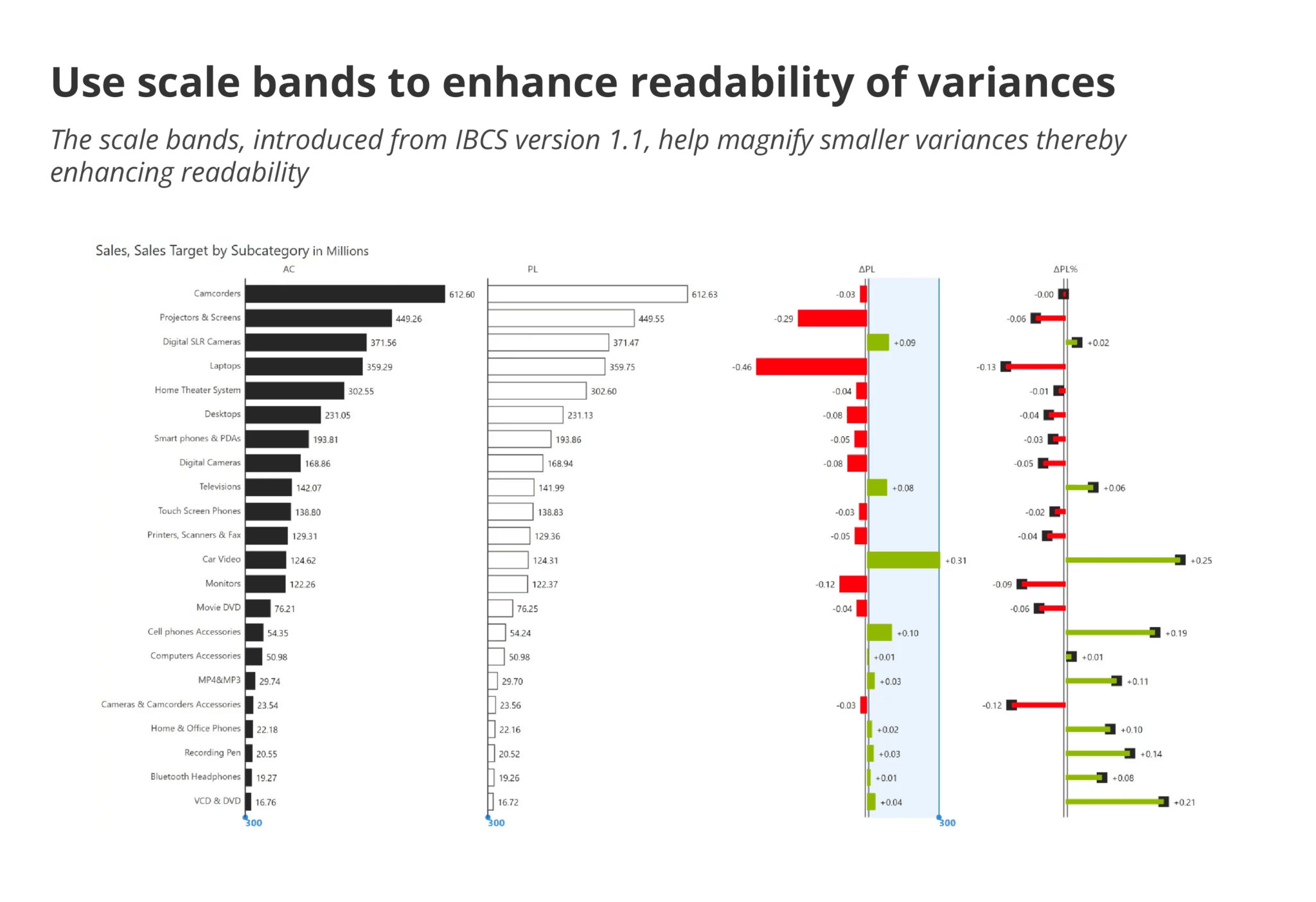
The Strict IBCS theme applies all IBCS notation rules exactly as specified - solid fills for actuals, outlined shapes for plan, grey for prior year, and hatching for forecast. This suits organizations that have formally adopted IBCS and require full compliance. The Flexible IBCS theme supports familiar visualization elements - custom axes, reference lines, and number formatting conventions - while maintaining the structural principles of IBCS, making it easier for global teams at earlier stages of adoption to transition progressively.
Does it require Microsoft Fabric to use IBCS features?
Yes — Microsoft Fabric Planning is built natively on Microsoft Fabric, using Power BI Semantic Models as the data source. This architecture allows direct writeback to the source without ETL pipelines or intermediate tables, and enables high-performance rendering for datasets with 1M+ data points. IBCS reporting, planning, and collaborative features are all delivered within the Fabric environment, maximizing your existing Microsoft investment.
Can we use it alongside our existing Power BI reports?
Yes. Microsoft Fabric Planning is designed to extend your existing Power BI Semantic Models - not replace them. You can apply IBCS-certified visuals and planning capabilities on top of current data models, incorporating standardized charts, tables, and planning inputs progressively. The Intelligence Sheet module provides structured workflows for IBCS reporting, paginated reporting, and scheduling that work alongside standard Power BI dashboards.
How do we get started with IBCS-certified reporting?
The fastest way to get started is to request a personalized demo - our team will walk you through the IBCS template library, show how templates are applied to your Semantic Model, and configure a pilot report in your environment. You can also download our IBCS Quick-Start Guide and pre-built planning templates from the Resources section above. For teams new to IBCS, we recommend beginning with the Flexible IBCS theme and the T01 one-click table template.